

The Previous Owner's Strange Decisions and How a Handyman Unpicks Them
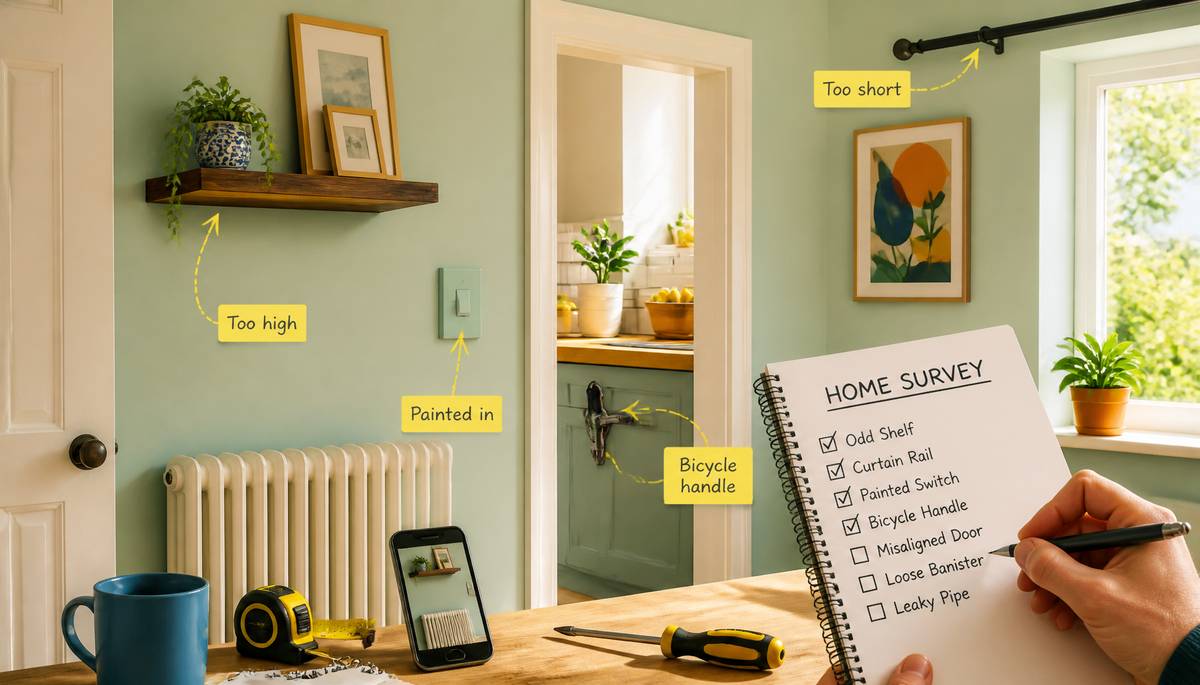 A shelf hovering halfway up a wall can make a new home feel briefly haunted. It may be too high for books, too low for a picture and positioned directly above a radiator, where any object placed upon it will spend its days being gently slow-cooked. Elsewhere, a curtain rail may stop several inches before the window ends, a light switch may have been painted into the colour scheme, and a kitchen cupboard handle may have been replaced with something that appears to be part of a bicycle.
These are the small, strange decisions left behind by previous owners. Most are not dangerous, and many once made perfect sense to somebody. Perhaps the shelf held a television in 2004. Perhaps the odd hook was for a beloved but enormous clock. Perhaps the painted-over hinge was simply caught in the crossfire of a fast-moving decorating weekend. Yet each inherited alteration deserves a calm look before anyone starts pulling, scraping or covering it with another layer of improvised logic.
Start With a Proper Inventory
Walk through the property with a notebook or phone and record every feature that seems unusual, inconvenient or unfinished. Photographs are useful, particularly where several issues sit in the same area. A handyman can work more efficiently when the oddities are grouped by room and described clearly rather than introduced one at a time like surprise guests at a party.Separate the jobs into three broad groups: cosmetic annoyances, practical defects and possible safety concerns. A cupboard door that does not line up is irritating. A loose banister, exposed cable or badly secured wall unit should move much higher up the list. If there is any uncertainty around wiring, gas, plumbing or structural work, the handyman may recommend a suitably qualified specialist instead of attempting a cheerful rescue with a screwdriver and optimism.
Look for the Reason Before Removing It
The baffling shelf may conceal old fixings, a damaged patch of plaster or a cable route. A panel fixed over a wall could be hiding a pipe access point rather than merely offending the eye. Painted hardware may have become stiff because paint has sealed moving parts, but it might also have been painted because the item was already damaged.A methodical handyman will inspect how something is attached, what sits behind it and whether removal will create a larger repair. This does not mean every mystery deserves a documentary investigation. It means taking a few minutes to avoid turning a slightly irritating bracket into a crater-shaped afternoon.
Untangling Mismatched Fittings
Mismatched handles, hinges, sockets and trim pieces are common after years of small replacements. Sometimes they can be standardised easily; sometimes the original fitting is obsolete and the sensible answer is to replace the whole visible set. The aim is not always historical perfection. It is a room that works properly and no longer looks as though several different households held a committee meeting in it.Repair What Matters Before Refining What Shows
Once the list is clear, deal with function before appearance. A drawer that catches because its runners are failing should be repaired before new handles are fitted. A shelf should be made secure, relocated or removed before the wall around it is repainted. A badly patched leak needs its cause identified before anyone invests time in making the stain disappear. Fresh paint is wonderfully persuasive, but it cannot convince a loose fitting to become structurally sound.This order also helps with budgeting. Ask for the essential repairs to be priced first, then decide which visual improvements can be completed during the same visit. Grouping sensible jobs saves repeat call-out time, but there is no prize for commissioning every irritation in one heroic afternoon. A house can reveal its personality gradually. It has probably been doing so for years.
Keep Useful Evidence of the Weirdness
Before anything is removed, take a few photographs. This is particularly helpful if the property is still under warranty arrangements, if a concealed issue later becomes relevant, or if you need to remember where an old cable, pipe cover or fixing was located. It also provides a small private archive of the home’s former eccentricities.There is something oddly reassuring about looking back at a photograph of the tiny shelf above a doorway, the one too narrow for storage and too sturdy to be accidental. It confirms that it really existed. You did not imagine it during the stress of moving boxes and discovering that none of the light switches operate the nearest light.
Ask for Options Rather Than One Verdict
A good handyman can often offer more than one route forward. The painted-over door hardware might be cleaned and restored, replaced with a similar modern set, or upgraded while other doors are being addressed. An awkward shelf could be removed and the wall repaired, lowered and reused, or adapted into something genuinely useful.Ask what each option involves, how long it should last and whether extra materials are needed. The cheapest solution is not always the best value, particularly where the same problem has clearly been repaired several times before. A strip of tape over a crack may be an emergency measure; when it is painted to match, it becomes an archaeological layer.
Unpicking the Past Without Pulling Down the House
Inherited DIY is rarely a reason to panic. Most strange decisions can be handled one careful fix at a time, with the safety issues addressed first and the decorative puzzles dealt with when budget and patience allow. A handyman brings more than tools to this work. They bring the useful ability to distinguish a harmless oddity from a repair waiting to become expensive.The aim is not to erase every trace of the people who lived there before. It is to make the home work for the people living there now. Once the mismatched fittings, stubborn paint, misplaced shelves and mysterious brackets have been dealt with, the property begins to feel less like an inherited riddle and more like a place with a future.
Article kindly provided by glasgow-handymansolutions.co.uk
Latest Articles
- Before You Hire a Handyman, Photograph the Problem Properly
- The Repair That Reveals Three More Repairs: How to Handle Scope Creep Calmly
- The 'While You're Here' List: Small Jobs That Are Worth Grouping Together
- The Previous Owner's Strange Decisions and How a Handyman Unpicks Them
- The Guest Test for Small Home Repairs
- Why a Door That Still Locks Can Still Be a Security Problem
- The One-Hour Home Audit: Small Defects That Quietly Become Expensive Repairs
- Can a House Be Too Well Insulated? Understanding the Other Half of Low-Energy Design
- Your Roof Needs to Breathe Too: The Link Between Ventilation, Condensation and Hidden Timber Damage
- Why Your Boiler Behaves Perfectly Until the Weather Turns Cold
- Why Roof Age Is Only Part of the Picture
- How HOA Boards Can Catch Pavement Problems Before They Get Expensive
- Why Vacuuming Alone Eventually Stops Making a Carpet Look Clean
- Designing a Garden That Still Works After the Sun Goes Down
- Why Your Boiler Sounds Different in Summer Than It Does in Winter
- Case Study: Patio Installation Costs in Newcastle
- Why Your Garden Could Be the Most Underrated Fitness Space You Own
- The Hidden Costs of Ignoring Tree Stumps After Felling
- How Much Does a New Roof Cost in Portsmouth? 2026 Pricing Guide
- Choosing the Right Hot Water System for the Way You Actually Live
- Interior Design
- Home Improvement
- Gardening
- Home Organization
- Home Maintenance
- DIY Crafts
- Kitchen and Dining
- Bathroom Design
- Home Security
- Home Automation
- Green Living
- Home Office
- Home Decor
- Garden Design
- Pet Care
- Home Technology
- Landscaping
- Home Energy Efficiency
- Home Cleaning
- Home Safety
- Home Exterior
- Home Insulation
- Home Buying
- Home Selling
- Renting
- Tradespeople
- Garage
- Bedroom
- Painting and Decorating
- Plumbing and Drainage